
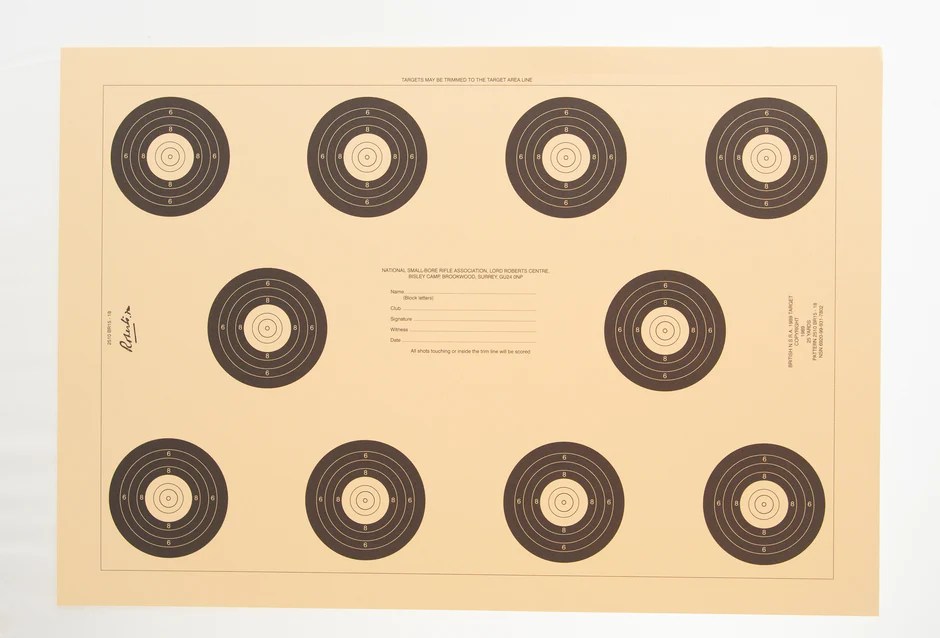
LWSR (lightweight sports rifle)
LWSR (Lightweight Sport Rifle) under NSRA rules is a small‑bore discipline using a rifle of no more than 4.5 kg, shot at short range (typically 20–25 yards), with restrictions on equipment to keep the sport accessible and fair.
🔑 Key Features of NSRA LWSR
• Maximum overall weight: 4.5 kg including sights and accessories
• No minimum trigger‑pull weight, but the trigger must be safe; the Range Conducting Officer (RCO) can rule it unsafe
• Rifles may be single‑shot or magazine‑fed, but no more than 10 cartridges/projectiles may be loaded at once
• Stocks may be adjustable for length and cheekpiece; fore‑end shaping is allowed up to 150 mm from bore centre, but must not be anatomical
• Either iron sights or telescopic sights may be used, depending on competition format
• Shooting position typically shot at 25 yards, though some competitions allow benchrest or standing formats
• Specialist clothing (jackets, slings, stiff trousers) is not permitted; only a glove for the supporting hand may be used
• Postal and shoulder‑to‑shoulder matches are both run under NSRA rules
• Targets follow NSRA dimensions, with scoring rings similar to other small‑bore disciplines.
• LWSR grew in popularity after the UK ban on centre‑fire and rimfire pistols in 1997, offering shooters a lightweight, accessible rifle discipline
• It is now a widely adopted NSRA competition, with leagues and postal matches across the UK.
📌 Summary
Under NSRA rules, Lightweight Sport Rifle (LWSR) is a discipline designed to be inclusive and practical: rifles are capped at 4.5 kg, specialist clothing is banned, and shooters compete at short ranges with either iron or telescopic sights. It’s a precision sport that balances accessibility with skill, making it one of the most popular NSRA disciplines today.
Benchrest
Benchrest shooting under NSRA standards is a small‑bore discipline where shooters fire from a provided bench, using a rest at the rifle’s fore‑end only, with strict rules on equipment, position, and scoring.
🔑 Key Features of NSRA Benchrest Shooting
• A bench is provided by the organisers (or at the shooter’s club for postal competitions).
• The bench may be shaped to support the shooter’s elbow, but it must not control its position
• The shooter sits at the bench, typically on a stool.
• No part of the rifle receiver may extend in front of the firing line
• Only one rest at the fore‑end of the rifle is permitted.
• A sling may be used instead of a rest, but not in addition to one
• Air rifles, Light Sporting Rifles (LSR), or small‑bore rifles may be used.
• All rifles must be single‑loaded (no magazines or repeaters)
• NSRA benchrest competitions are usually shot at 20 or 25 yards, depending on the match format.
• NSRA benchrest targets have defined scoring rings, including the X‑ring and 10‑ring.
• Scoring can vary slightly depending on whether rimfire (.22LR) or air rifles (.177) are used, as pellet holes differ in size
• All NSRA competitions follow the official NSRA Rules & Regulations (updated April 2021).
• Benchrest rules are clarified in section 8.16 of the NSRA regulations
Air pistol
10m Air Pistol shooting under NSRA standards is a precision target discipline, shot at 10 metres with strict rules on pistol specifications, position, and scoring, aligned with ISSF international regulations.
🔑 Key Features of NSRA 10m Air Pistol Shooting
• All shots are fired at 10 metres.
• Targets follow ISSF dimensions, with concentric scoring rings down to the 10‑ring.
• Pistols must meet limits on dimensions, overall weight, and trigger‑pull weight.
• Only compressed air or CO₂ pistols are permitted.
• Calibre is restricted to 4.5 mm (.177) pellets.
• The pistol must be fired one‑handed only, from a standing, unsupported position.
• No artificial supports, rests, or slings are allowed.
• Shooters control their own tempo, provided they stay within the maximum time limit for the match.
• Scoring is ring‑based, with decimal scoring sometimes used in finals.
• NSRA rules state that air pistol competitions comply with ISSF regulations, except where specifically modified for UK competitions
📌Summary
For the NSRA, 10m Air Pistol is a highly regulated Olympic‑style event focused on precision and consistency. Shooters fire at 10 metres using a one‑handed stance, with pistols restricted by size, weight, and trigger pull. Competitions follow ISSF rules, ensuring UK shooters train and compete to the same standards as international athletes.
Prone
Prone Smallbore shooting under NSRA rules is a precision rifle discipline shot lying face‑down (prone) at 25 yards or 50 metres, using a .22LR rimfire rifle with iron/aperture sights, supported by a sling and specialist clothing.
🔑 Key Features of NSRA Prone Smallbore Shooting
• Rifles must be chambered in .22 Long Rifle (5.6 mm rimfire)
• If fitted with a magazine, only one cartridge may be loaded at a time
• Telescopic sights are not permitted; only iron or aperture sights may be used
• The shooter lies prone (face‑down) on the firing point.
• The rifle is supported by a sling attached to the upper arm and rifle fore‑end, not by artificial rests.
• Specialist clothing (shooting jacket, trousers, boots, and glove) is permitted to provide stability
• NSRA competitions are shot at 25 yards (indoor) or 50 metres (outdoor).
• Targets have concentric scoring rings, with the 10‑ring and X‑ring demanding extreme precision.
• Prone smallbore is considered the foundation discipline of UK target rifle shooting.
• It tests consistency, breathing control, and fine adjustments, as the prone position is stable but demands technical precision.
📌 Summary
Under NSRA rules, Prone Smallbore shooting is a traditional and highly disciplined event: shooters fire .22LR rifles with aperture sights from the prone position, supported only by a sling and specialist clothing. Distances are short (25 yards or 50 metres), but the scoring rings are tiny, making accuracy and consistency the defining skills.
Air Rifle
🏹 NSRA Air Rifle
- Air Rifle Discipline: NSRA oversees structured competitions and training for air rifles, which are typically used at 6-yard or 10-meter ranges. These rifles are designed for precision target shooting rather than hunting.
- Targets & Rules: NSRA produces official air rifle targets (e.g., the NSRA Air 7-18, a 6-yard 5-target sheet) and sets the standards for scoring and competition
📌 Why It Matters
- Standardization: NSRA ensures that all UK air rifle competitions follow consistent rules, targets, and safety practices.
- Pathway to Excellence: Many Olympic shooters begin in NSRA air rifle disciplines before moving to international competitions.
- Enjoyment & Skill: It’s a sport that values precision, discipline, and continuous improvement—qualities you already appreciate in your shooting competitions.
 Portsmouth Railway Rifle & Pistol Club